

What is a segment?
Segments are one of the key features that give Vero its power. Unlike many of the more traditional email marketing tools, Vero uses segments in the place of lists. Lists are static groups of customers. Segments are dynamic groups created by filtering your Vero database based on your customers’ properties, events, past email interactions and tags. Dynamic lists allow you to set up the segment, and can reduce the amount of work for getting your campaigns out the door on a day-to-day basis. As a quick example, you might create a segment called Paying customers , including any users that have checked out recently on your website. Assuming you are tracking an event calledCompletes checkout using Vero’s API, you might segment out any customer that has triggered the eventCompletes checkout at least once in the last 30 days.
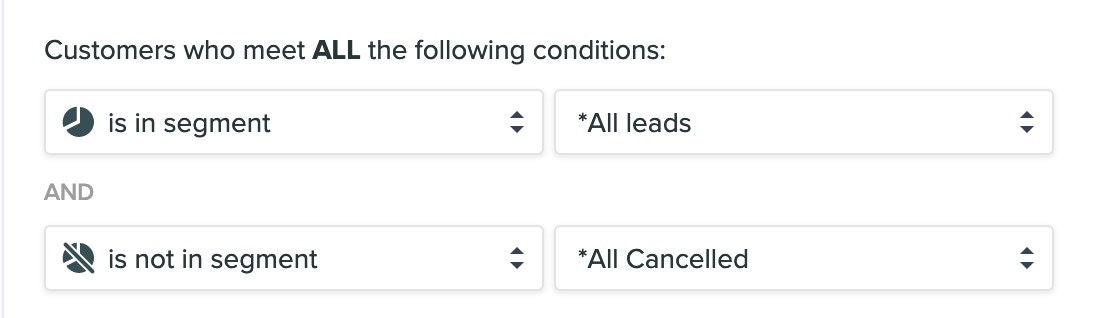
Once you have created a segment, you are able to use your segment to send newsletters and as conditions in behavioral campaigns. You can combine segments to get even more targeted.
Segmentation conditions
In Vero, there are four separate types of data stored about each of your customers. You can track and store customerproperties, tags and events. Vero also automatically tracks customers’ interactions with emails, opens, clicks and so on.
Using and and or , you can build up complex segments based on these data types. Below is a brief summary of each of the segmentation conditions you can use to filter your users.
Segments
Events

Email interactions

Customer properties

Has tags
